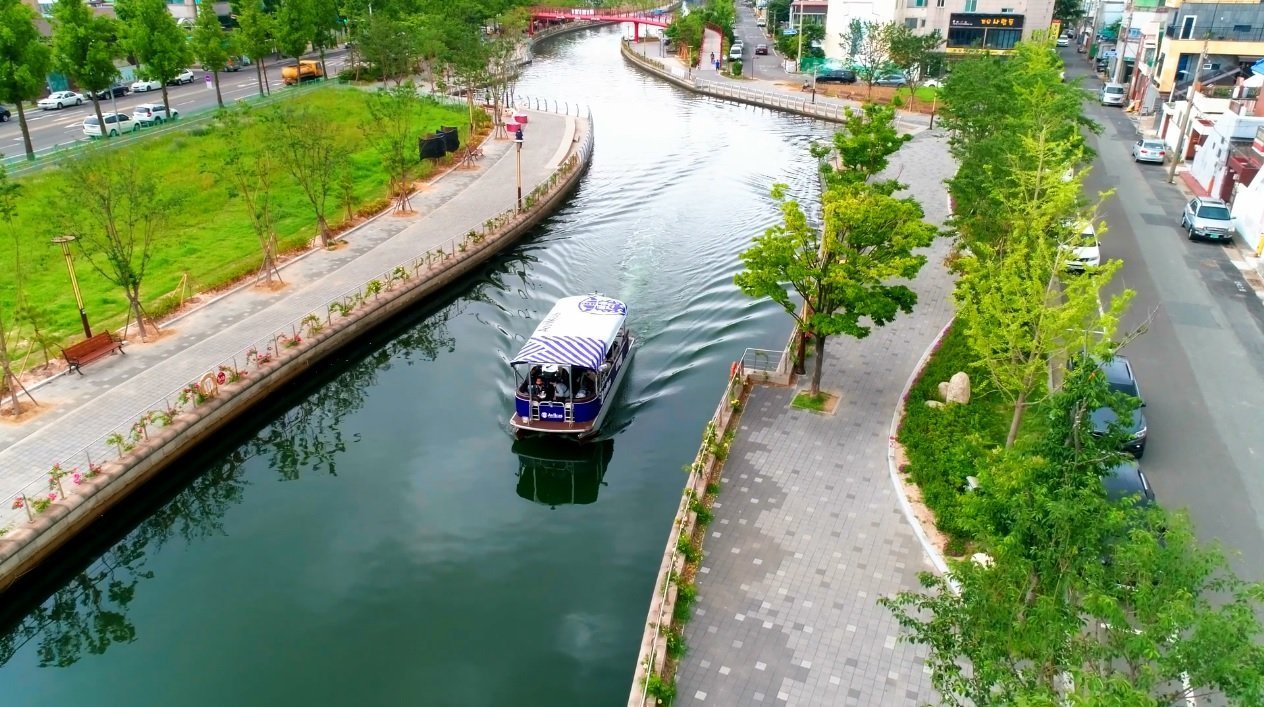
Hyundai Heavy Industries’ (HHI) newly established autonomous vessel subsidiary Avikus has successfully completed an unmanned trial voyage of a cruise ship with 12 passengers, becoming Korea’s first company to successfully demonstrate a ship navigating fully autonomously.
The test took place along the 10-kilometre Pohang Canal, a challenging waterway with an average width of just 10 metres. The ship was equipped with a range of autonomous technologies, such as HiNAS (Hyundai Intelligent Navigation Assistant System), which automatically recognises objects to highlight collision risks within an augmented reality (AR) framework, and HiBAS (Hyundai Intelligent Berthing Assistant System), which provides an overall view of the ship when berthing or clearing.
The various systems deployed allowed Avikus to complete the fully autonomous navigation of the ship throughout all stages of its voyage, from departure and sailing to return and docking.
Building on this successful demonstration, the company plans to expand testing different types of ships, including passenger ships and cargo carriers. Avikus says it is also planning for the world’s first transoceanic voyage of a large merchant ship relying on autonomous navigation technologies in conjunction with a large Korean shipping company, possibly as early as the second half of this year.
“We are poised to become the world’s first to commercialise a self-sailing leisure boat next year, based on our fully autonomous navigation technologies successfully demonstrated,” added Lim Do-Hyeong, CEO of Avikus.
“Through continued investments in R&D and talent, we will establish a position as a first mover in the autonomous ships market, which is considered the ultimate destination for future maritime mobility technologies.”