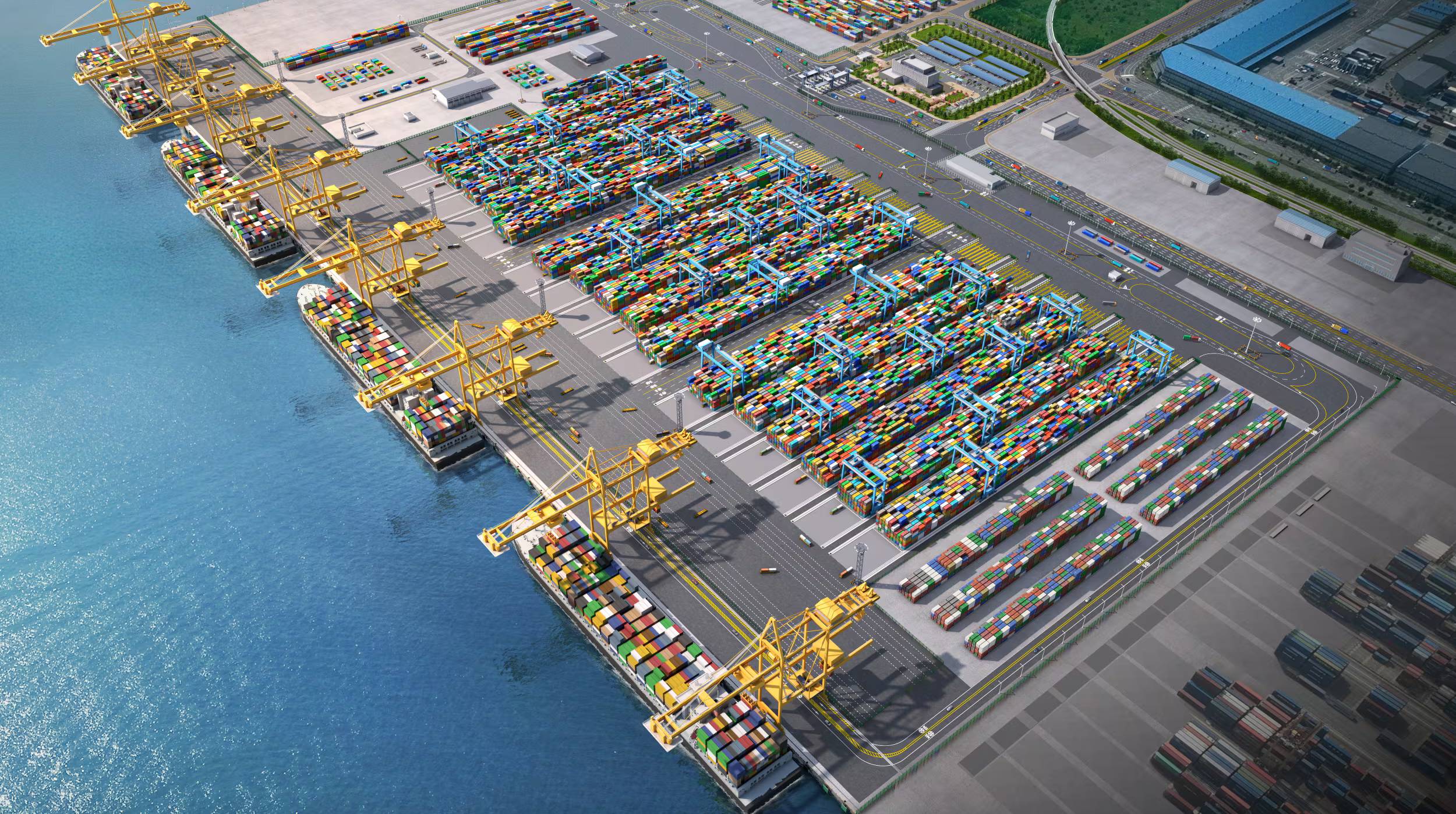
Construction has begun work on a new automated container terminal at Gwangyang Port that is intended to serve as Korea’s testbed for AI-enabled port operations and domestically developed automation technology.
The Ministry of Oceans and Fisheries held a groundbreaking ceremony for the project on 30 July, with the new terminal scheduled for completion by 2029.
The project represents an investment of KRW772.4 billion (approx. US$538 million) and will create a four-berth automated container terminal with an annual handling capacity of 1.36 million TEU.
Located at Gwangyang Port’s Phase 3-2 Container Terminal, the facility will use domestically developed cargo-handling equipment, container transport equipment and port operating systems. The ministry says the project is intended to support the wider deployment of automated ports in Korea while creating a domestic market for port automation technology.
Under the ministry’s recently announced Physical AI Port Strategy, the Gwangyang terminal will also be used to test Physical AI technologies in an operational environment.
Planned applications include agentic AI to optimise yard operations and AI systems that analyse Automated Guided Vehicle (AGV) routes in real time to identify cracks, ground subsidence and other hazards.
“The Gwangyang Port Automation Testbed will serve as a high-tech port that enhances Korea’s import and export logistics competitiveness, while functioning as a key hub spearheading Korea’s Physical AI port innovation by supporting the competitiveness of port technology and overseas expansion through the use of domestic equipment and systems,” said Hwang Jong-Woo, Minister of Oceans and Fisheries (translated from Korean).
“We will actively support this initiative so that the innovation starting at Gwangyang Port leads to enhanced overall competitiveness for our ports and drives the growth of the port technology industry.”