

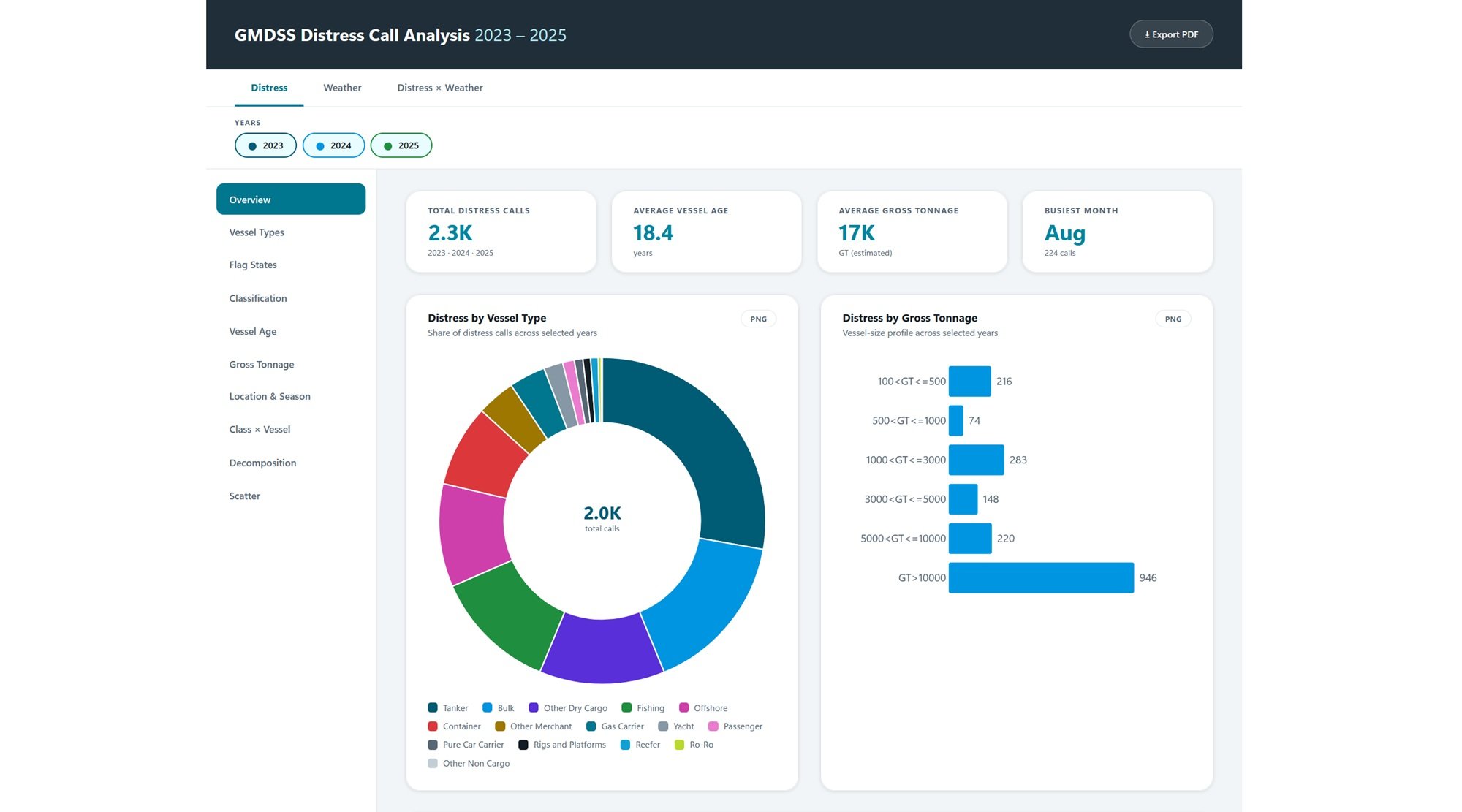
Inmarsat has launched a Maritime Safety Data Hub combining three years of Global Maritime Distress and Safety System (GMDSS) data with an analysis of 106,975 maritime safety broadcasts transmitted in 2025.
The platform allows users to examine safety trends by vessel type, region and incident category, with the analysis covering environmental hazards, operational pressures and geopolitical disruption.
Weather accounted for 84.6% of urgent safety broadcasts in 2025, with storms representing 75% of identified weather hazards.
By linking safety broadcasts with GMDSS distress calls, the analysis identified several cases where distress calls originated in areas where a weather warning had previously been issued.
Inmarsat carried out the analysis with consultancy SeaFocus, although it cautions that weather warnings cannot be interpreted as the cause of maritime incidents.
“The unique insights made available through this research will help the industry better understand the factors shaping maritime safety – and move from simply reacting to incidents to exploring the conditions, patterns, and emerging risks that surround them,” said John Dodd, Director of Maritime Safety, Inmarsat Maritime.
Inmarsat received 741 GMDSS calls in 2025, compared with 788 in 2023 and 801 in 2024, with the three-year trend remaining broadly consistent with historical averages.
The data also covers operational risks associated with disruption in the Red Sea, sanctions affecting tanker operations, tensions around the Persian Gulf and Black Sea, and increasing GPS spoofing and signal jamming in key trade corridors.
Tankers generated the highest number of GMDSS calls among vessel types, with 203 in 2025, followed by bulk carriers with 105.
Container ships recorded 54 distress calls, while operators also diverted vessels around the Cape of Good Hope to avoid physical attack risks in the Red Sea, adding up to two weeks to some voyages.


