

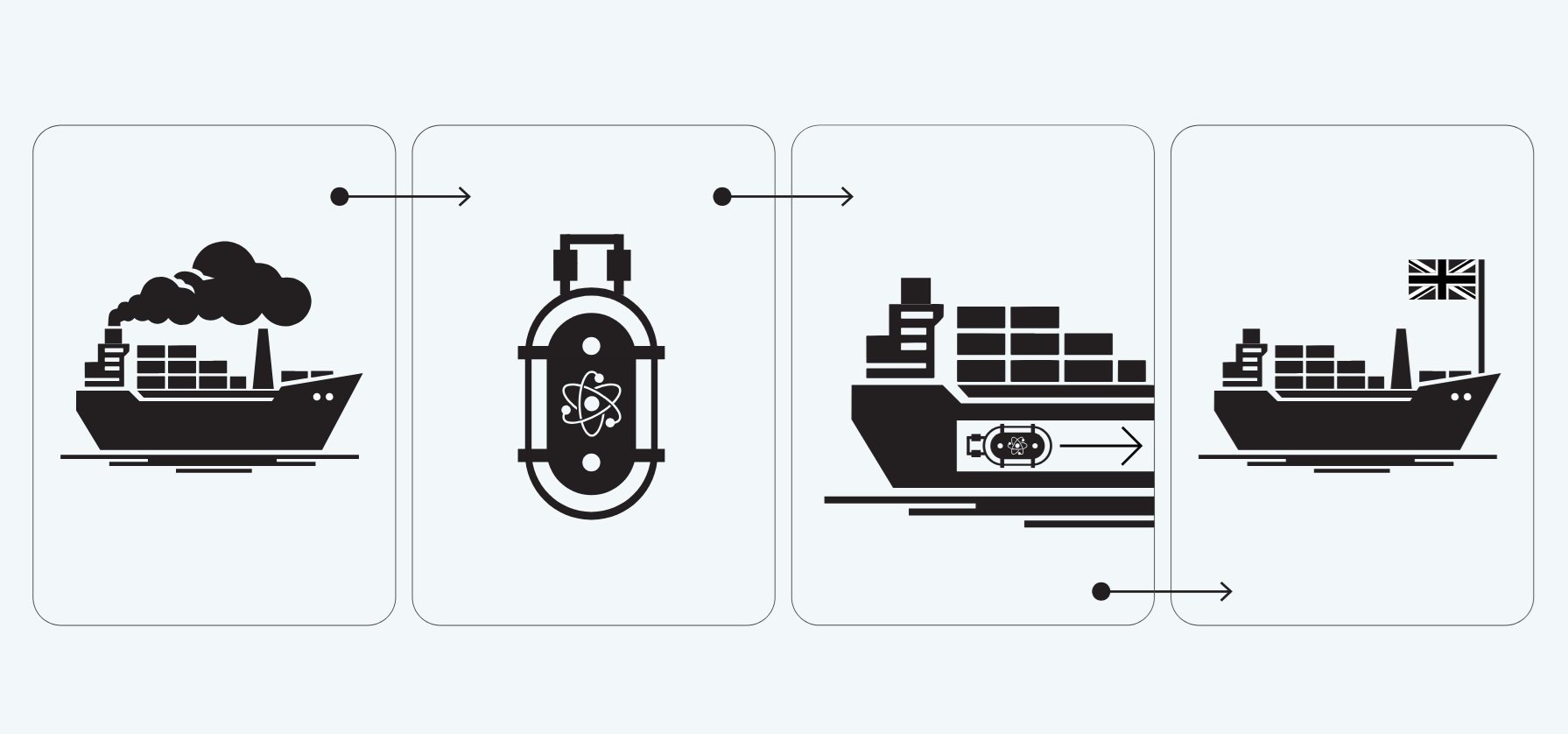
A UK maritime consortium, led by Lloyd’s Register (LR), has been created to develop a framework for nuclear-powered commercial shipping.
The group also includes Rolls-Royce, Babcock International Group, Global Nuclear Security Partners, Stephenson Harwood, and NorthStandard, and aims to address the regulatory, insurance, and security requirements of advanced modular reactors (AMRs).
The consortium says that it wants to set international standards for the construction and operation of nuclear-powered ships to support a net zero ocean economy, with the technology designed to allow ships to sail for several years without refuelling, eliminating carbon emissions while allowing vessels to maintain full design speeds.
The project will demonstrate a Statement of Design Acceptability (SODA) for a site-licensed AMR and develop a class certification framework that integrates nuclear and maritime regulations. The group will also establish insurability pathways and security architectures for the vessels to meet global regulatory requirements.
The programme will focus on the engineering and integration of nuclear systems into maritime vessels, building on the 700 marine nuclear reactors currently in operation in naval fleets globally. The consortium aims to publish guidance for industry and government to accelerate the safe adoption of the technology.
“Decarbonisation demands cleaner power, higher standards and a duty to the generations that follow. Nuclear is ready to meet that test,” said Nick Brown, CEO of Lloyd’s Register.
“If the UK leads on global standards, nuclear will mean more than zero-carbon ships. It will mean work in British shipyards, new business in the City, and lasting jobs for those who build, insure and sail the world’s fleet.”


