

Bureau Veritas Marine & Offshore has announced the launch of its latest Remote Inspection Technique (RIT) centre in Athens, Greece, joining a global network of seven remote centres.
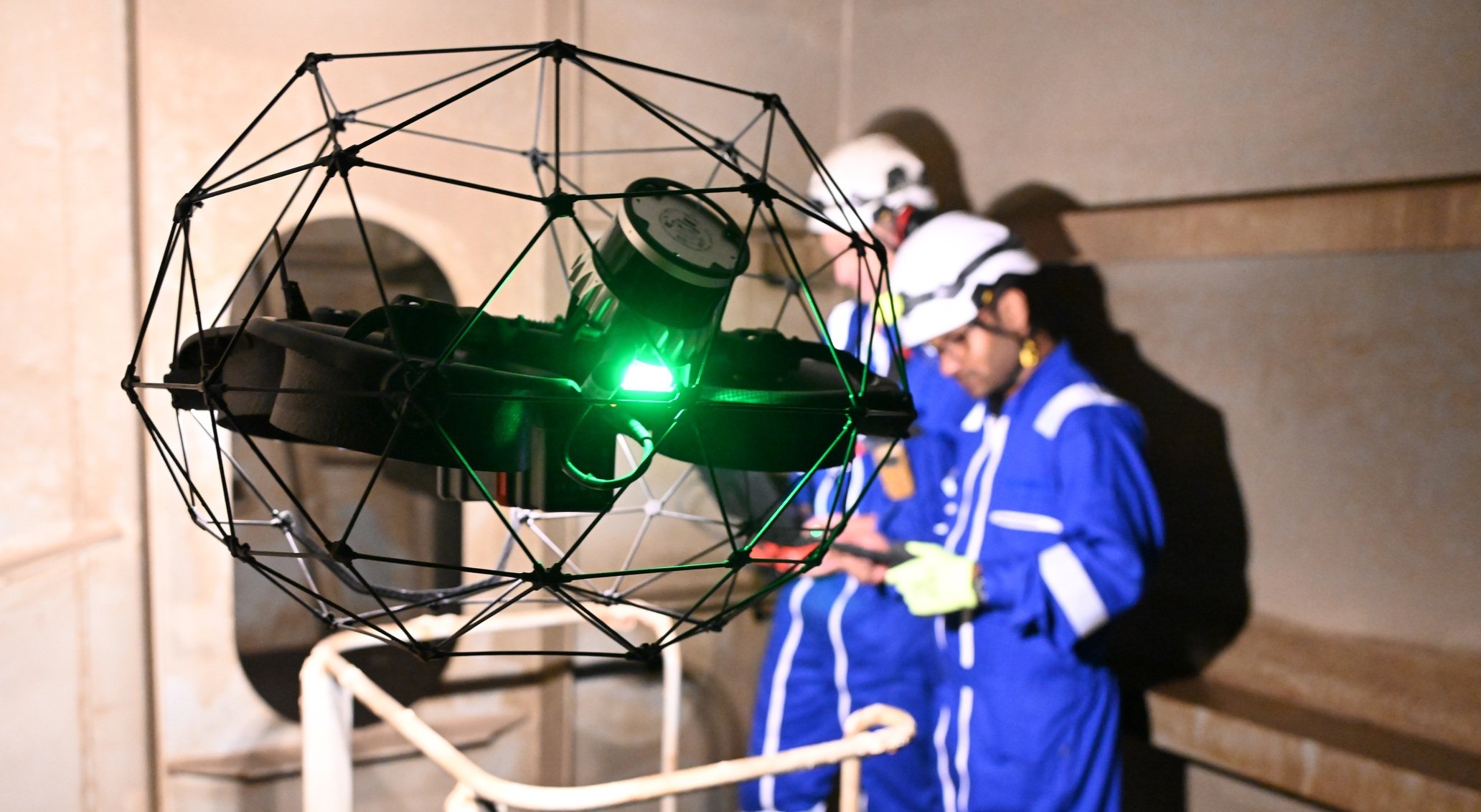
The RIT framework is a field-based methodology in which a trained Surveyor deploys drone and Unmanned Aerial Vehicle (UAV) technology while on board to inspect confined spaces, such as ballast tanks and cargo holds, to eliminate the need for physical entry into potentially hazardous areas.
The class society estimates that RIT reduces confined-space entry risk by 60 to 70 per cent, requiring only a single qualified Surveyor and one deck companion.
This process remains distinct from traditional remote survey engagements, which are typically limited to document reviews conducted at a distance without the physical presence of a Surveyor on board the vessel.
The RIT operational model also delivers structured, auditable inspection records supported by artificial intelligence-processed drone data that can be utilised by owners, lenders, hull cover providers, Protection and Indemnity (P&I) clubs, charterers and cargo owners.
“The expansion of our RIT network into Athens reflects both the maturity of the technology and the strategic importance of Greece to international shipping,” said Alex Gregg-Smith, President of Bureau Veritas Marine & Offshore.
“Each of our RIT surveyors is a subject-matter expert for a specific vessel type, and the combined approach of using AI to analyse drone-collected imagery before the surveyor validates the findings gives owners and operators a genuinely robust, two-stage quality-assurance process.”
“As shipping faces greater scrutiny from lenders, charterers, and regulators, our role is evolving from compliance referee to data-driven risk partner. We see the offshore sector’s current trajectory – where drone-assisted inspection is already becoming mandated for high-risk – as a strong indication of where sea-going vessel inspection is heading.”
Bureau Veritas says that it plans to expand its global RIT network to 16 centres featuring more than 40 qualified Surveyors by the end of 2026.


