Denmark has launched a new remote pilotage test programme that will allow pilots to guide vessels from a shore-based control centre using live data transmitted directly from ships.
The initiative, thought to be the first of its kind globally, has been granted by the Danish Emergency Management Agency and will be led by DanPilot and Danelec.
The system has been in development for six years, designed to improve safety and reduce emissions by removing the need for physical pilot boarding during selected transits. Remote pilotage will be tested in the Kattegat and western Baltic Sea on vessels with drafts under 13 metres, operating under conditions that do not require compulsory pilotage.
“Remote pilotage makes our work safer and helps reduce both CO₂ emissions and operational costs for our customers,” said Erik Merkes Nielsen, CEO of DanPilot.
“We have worked intensively towards this for six years, and now we can finally test it in practice. It has the potential to become a major paradigm shift in how pilotage is carried out.”
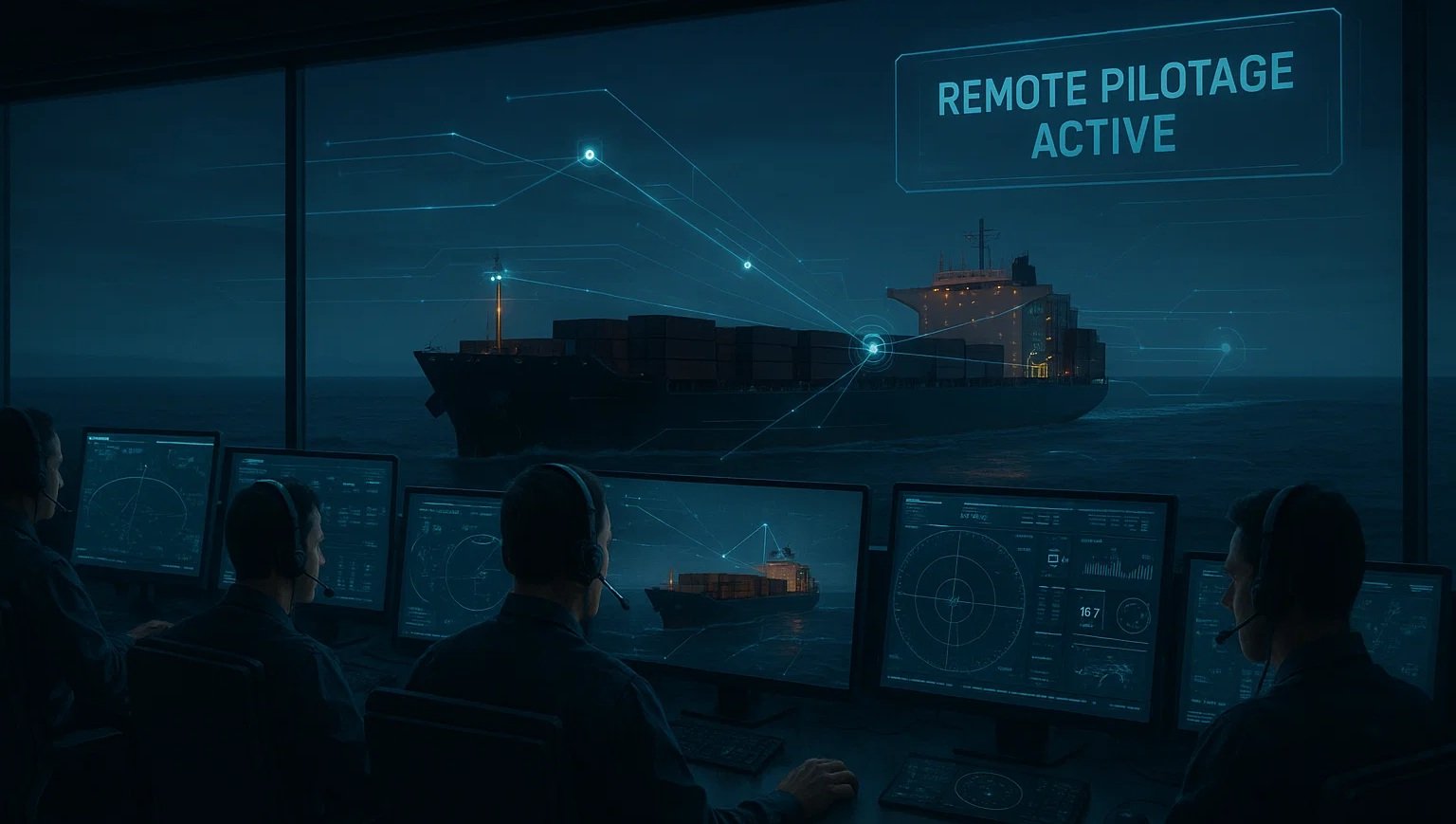
The system uses Danelec’s technology to transmit data such as course, speed, and position via the ship’s Voyage Data Recorder (VDR). This information is relayed in real time to a control centre in Randers, where pilots use dedicated software to provide navigational guidance without boarding the vessel.
The test phase is expected to cover up to 50 pilotages over a period of 18 months, with participating ships provided by a range of operators, including Maersk. DanPilot estimates the system could be relevant to around 10% of its operations in Danish waters, particularly where pilot boat deployment can be avoided without compromising safety.