

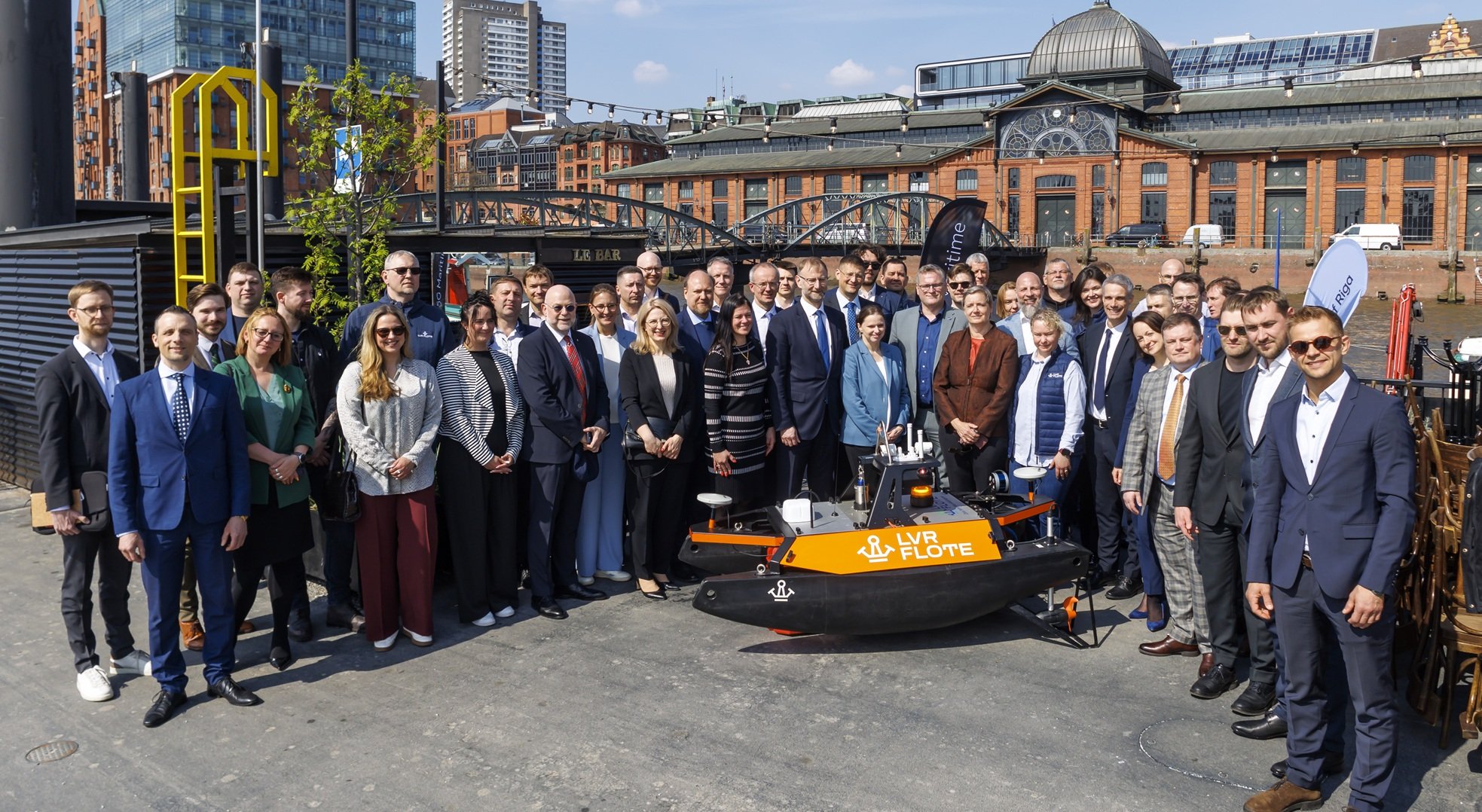
LMT Group has completed a demonstration of a new tool for monitoring port equipment activity and estimating greenhouse gas (GHG) emissions in Hamburg.
The technology uses video analytics and vision-language models to identify vehicle and equipment movements, providing data to estimate emissions and evaluate port efficiency.
“Today’s demonstrations clearly illustrate the potential of data-driven technologies to support the transformation of ports toward greater sustainability,” said Karsten Schönewald, Managing Director of Flotte Hamburg.
“For Flotte Hamburg, it is clear that the path to climate neutrality requires not only investments in infrastructure, but also precise and reliable data as a basis for decision-making. Innovative approaches like this can make a significant contribution to improving both efficiency and environmental performance in port operations.
The system analyses real-time video and measures the duration and intensity of activity to link operational movements with emissions data. Unlike processes that require predefined datasets, this version uses vision-language models to interpret unstructured visual data and adapt to new environmental conditions without retraining.
“By leveraging vision-language models, we’ve moved beyond the rigid training requirements of traditional computer vision,” said Kārlis Kalniņš, Computer Vision & Edge AI Product Owner at LMT Group.
“This approach allows us to adapt instantly to new variables – like a new vehicle type entering a terminal – while maintaining a strict ‘privacy-by-design’ framework. We aren’t identifying people or licence plates; we are analysing visual characteristics to drive port efficiency without ever compromising individual anonymity.”
The demonstration follows a Memorandum of Understanding (MoU) signed in June 2025 between Latvian and German partners, including the Port of Riga, the Hamburg Port Authority, and LMT Group.


