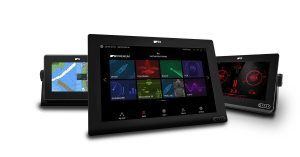
Lloyd’s Register (LR) reports that it has undertaken testing of the AI-powered navigation platform developed by Orca AI during a live vessel trial on a feeder containership.
The five-day voyage took place through the Mediterranean shipping lanes between the port of Gioia Tauro in Italy and Marsaxlokk, Malta.
The assessment focused on how AI-based computer vision supports human decision-making in complex navigation scenarios, including congested waters and reduced visibility. The platform was evaluated for its object detection performance alongside radar, Automated Identification System (AIS), and visual watchkeeping.
“As the onboard assessor, I observed the demonstrated capabilities of AI-based computer vision within the operational environment. This provides a clear indication of the performance potential and scalable application of emerging technologies in maritime navigation systems,” said Han Beng Koe, Ship Performance Specialist at LR.
The platform identified close-range and low-signature targets, such as non-AIS vessels and small craft, which were not always visible on traditional systems. The tests took place during both daytime and night operations.
“This significant project serves as an important reference point for data-driven system evaluations. It reflects our shared commitment to the adoption of novel technologies, at a time when decarbonisation and autonomy are becoming increasingly intertwined,” adds Dipali Kuchekar, Product Manager (Marine and Offshore) at LR.
The trial also incorporated human factors workshops to evaluate the usability of the technology. These sessions were overseen by Stephanie McLay, Team Lead – Human Factors at LR, to ensure that feedback from seafarers is integrated into the design of AI-enabled systems.
“From a human factors perspective, it is not just about what the technology can do. It is about how effectively it supports the human operator. These workshops demonstrated how structured feedback and user-centred design can play a critical role in shaping safer and more usable AI-enabled navigation systems,” said Ms McLay.
Orca AI says that more than 1,200 vessels currently use its technology. The data collected from this trial will be used to create a structured approach for evaluating situational awareness systems, alongside crew feedback.
“What this trial shows is that AI-assisted navigation is no longer a future concept, it is already delivering measurable value in live operations,” said Dor Raviv, Orca AI Chief Technology Officer and Co-founder.