

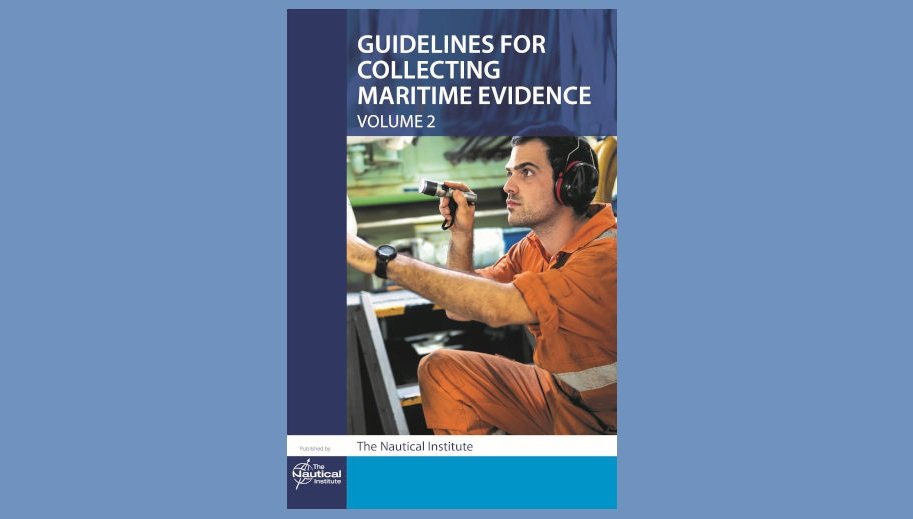
The Nautical Institute is to publish a second edition of its Guidelines for Collecting Maritime Evidence, Volume 2, addressing the use of electronic records, artificial intelligence and digital reconstruction in maritime casualty investigations.
Originally published in 2019, the updated guidance examines how evidence generated by onboard systems should be identified, recovered and preserved following an accident or incident.
It covers electronic evidence recovery, evidence following fires and machinery failures, cargo deterioration, visual reconstruction and analysis, and the use of digital tools in investigations.
The publication also addresses evidence gathering for prosecution, the P&I perspective, average adjustment, and evidence used in the Admiralty and Commercial Court.
“Ships now produce an extraordinary amount of digital information, but having more data available does not automatically mean that the circumstances of an incident will be easier to understand,” said Simon Daniels, Technical Editor of the publication.
“The quality of an investigation still depends on knowing where relevant evidence may be found, acting quickly enough to preserve it and understanding the limitations of the systems that produced the evidence.”
The guidance also considers the use of AI in casualty investigations, with material generated or supported by AI requiring verification and professional scrutiny.


