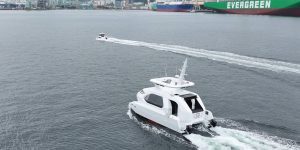
A human-centric multi-stakeholder collaborative effort is necessary to effectively adapt regulatory regimes to enable the commercial adoption of Maritime Autonomous Surface Ships (MASS), according to a joint report produced by Mitsui OSK Lines (MOL) and LR.
The publication calls for international collaboration in the creation of Regulatory sandboxes – controlled environments where new technologies can be tested under real-world conditions – bringing in governments, regulatory bodies, industry stakeholders, and maritime operators.
The report argues that MASS could have a profound impact on the maritime sector, offering significant advancements in operational efficiency, safety, and sustainability, emphasising that combining the applied human intelligence of the crew with AI software could improve safety and operational performance.
A suggested roadmap for the industry to address critical challenges through the adoption of these advanced technologies is also included, emphasising that autonomous ships must adhere to international regulations and safety standards as systems develop, including the upcoming IMO MASS Code, the COLREGs, STCW and SOLAS.
“The integration of MASS into the global maritime landscape requires not just technological innovation, but also a robust and adaptable regulatory framework,” said Joseph Morelos, Maritime Complex Systems and Autonomy Leader at LR.
“Our collaboration with MOL aims to pave the way for the safe and efficient implementation of autonomous technologies in shipping, ensuring they meet the highest standards of safety and compliance.”
The full report can be downloaded here.