

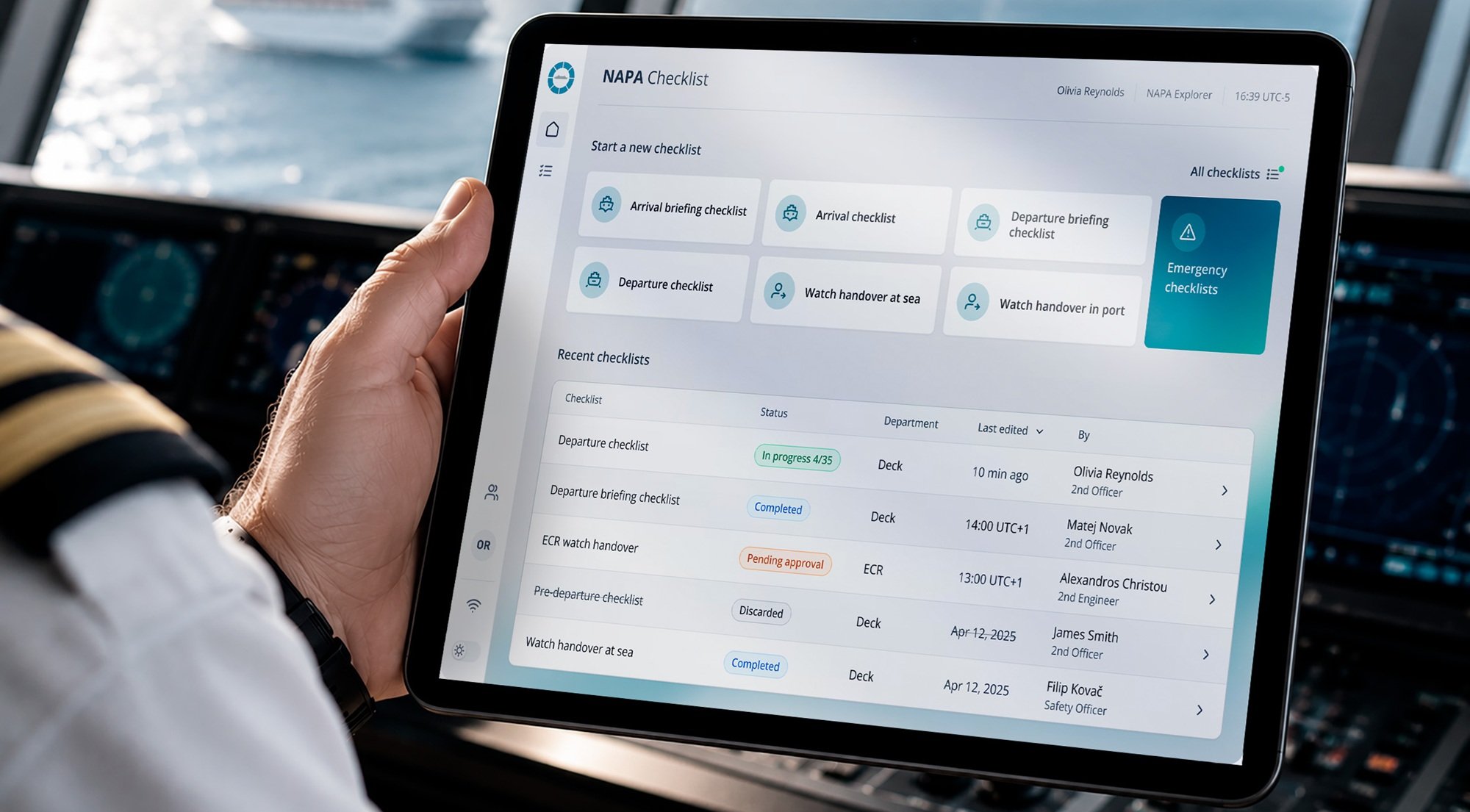
NAPA has launched a digital checklist system for onboard operations, with expedition cruise operator HX Expeditions among the first users.
NAPA Checklist replaces paper and static PDF checklists with guided workflows that take crew through procedures in the correct order and automatically record each completed action with a timestamp and the name of the person carrying it out.
Completed tasks are fed directly into NAPA Logbook, removing the need for duplicate data entry.
“Operating in remote environments requires a balance of consistency and practical flexibility. We co-developed NAPA Checklist because we wanted a tool built around how our crews actually work,” said Vsevolod Pashkov, Maritime Compliance Manager and CSO, HX Expeditions.
“We expect it to bring greater consistency and efficiency to daily operations on board, reduce duplicate admin, and improve real-time information flow between ship and shore.”
The system also connects to NAPA Fleet Intelligence, allowing shore-based safety and compliance teams to create and update checklist templates and publish them to individual vessels or entire fleets. Completion status can be monitored across the fleet in real time.
NAPA Checklist consists of a mobile application used on board and an editor within NAPA Fleet Intelligence for managing checklist templates and monitoring shipboard activity.
The system can be configured for mandatory checklists required under ISM and SOLAS, as well as procedures contained within an operator’s own safety management system.
NAPA Checklist has been developed with officers and crew from cruise and expedition operators since autumn 2024.
“There is a meaningful difference between putting a form on a screen and building a guided workflow that carries the correct procedure into the task, records it as it happens, and connects to the rest of what the ship already runs on,” said Sami Koponen, Product Owner, NAPA Checklist, NAPA.
“We built NAPA Checklist with crew from the beginning, which is why adoption has been strong everywhere it has been deployed. The goal was always to reduce the load on the people doing the work, not to add another system to manage.”


