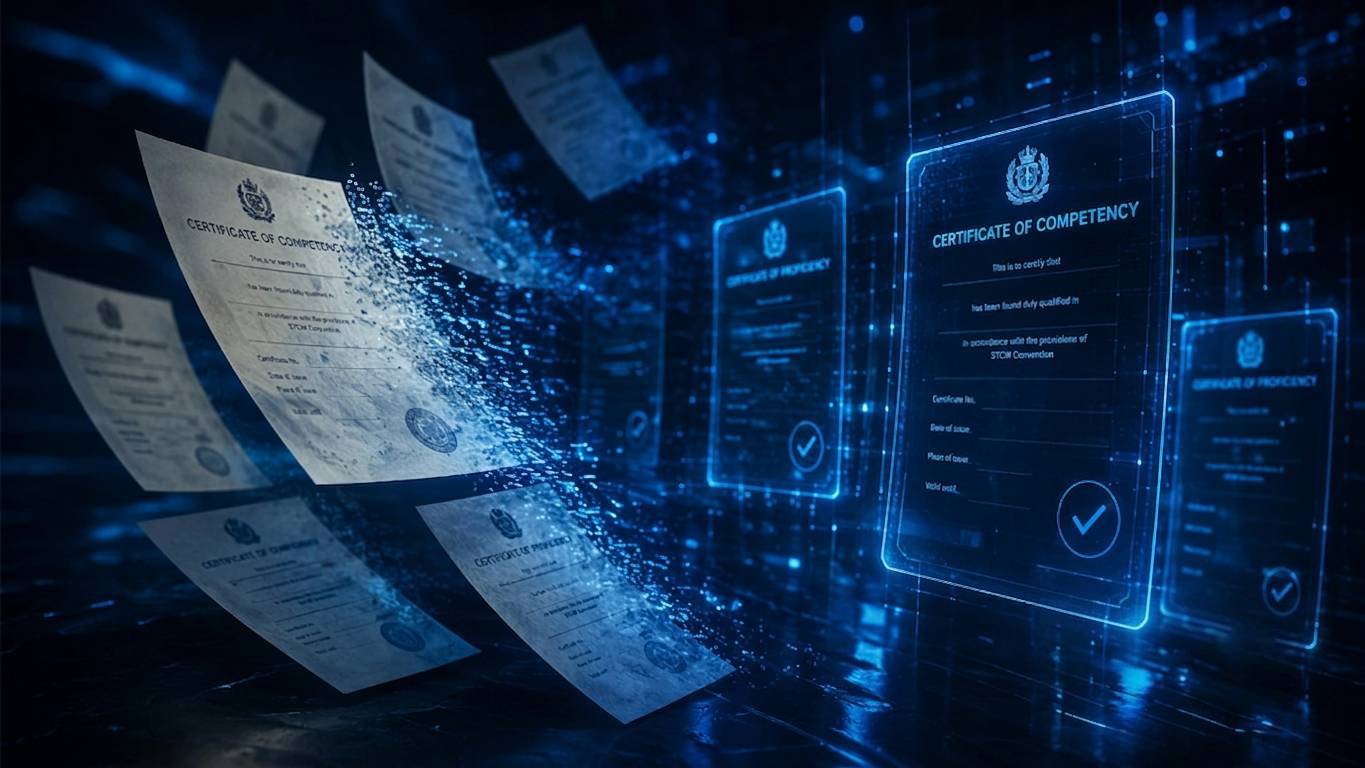
BIMCO has announced the results of an industry pilot to demonstrate interoperability between independent digital seafarer certificate platforms, to verify that the systems could exchange identity and certificate information without requiring users to adopt the same technology or platform.
The workshop at BIMCO House in Copenhagen included seven independent digital certificate platforms and examined whether electronic certificates could be transferred between systems while preserving the meaning of the data and its links to the relevant seafarer. The exercise used artificial test data for testing.
The demonstrations included structured file transfers, digitally generated PDFs containing machine-readable data, and API-based exchanges in which users selected the information to share. The receiving platforms were able to import and interpret the information despite differences in their internal data structures and technical approaches.
The IMO Compendium was used by all participants as the common reference for the meaning of exchanged data, allowing systems to map information consistently even where their internal field names differed. However, BIMCO’s report notes that some exchanges required advance coordination or system-specific adjustments, meaning the pilot demonstrated technical feasibility rather than universal plug-and-play interoperability.
BIMCO identified the development of a common, portable seafarer certificate file as the most practical next step following the pilot.
The proposed specification would preserve the relationships between seafarer identities, certificates and issuers, while allowing information to move through different channels, including offline transfer. It would also look to build on existing open international standards for digital credentials rather than introduce a new maritime-specific format.
The report highlighted the distinction between exchanging information and establishing that it can be trusted. Receiving systems need to verify the origin and integrity of a certificate, establish whether its issuer is recognised, and determine whether the certificate remains valid, suspended, revoked or replaced.
Common guidance is therefore needed on issuer recognition, trust arrangements, verification and the practical acceptance of electronic certificates by administrations, employers and Port State Control authorities. The report proposes machine-readable trust lists maintained by competent authorities, discoverable issuer signing keys and consistent approaches to checking certificate status.
The recommendations also envisage a staged transition from machine-readable and digitally verifiable PDFs to portable certificate files and, eventually, credentials held in seafarer-controlled digital wallets. Throughout that transition, the report stresses that converted records and scanned documents must remain distinguishable from credentials signed by their original issuer.
BIMCO intends to use the findings to inform further industry collaboration and engagement with the IMO, including possible consideration by a future session of the IMO Facilitation Committee. The work may also support continued discussions under the BIMCO Digital Certificate Charter.