

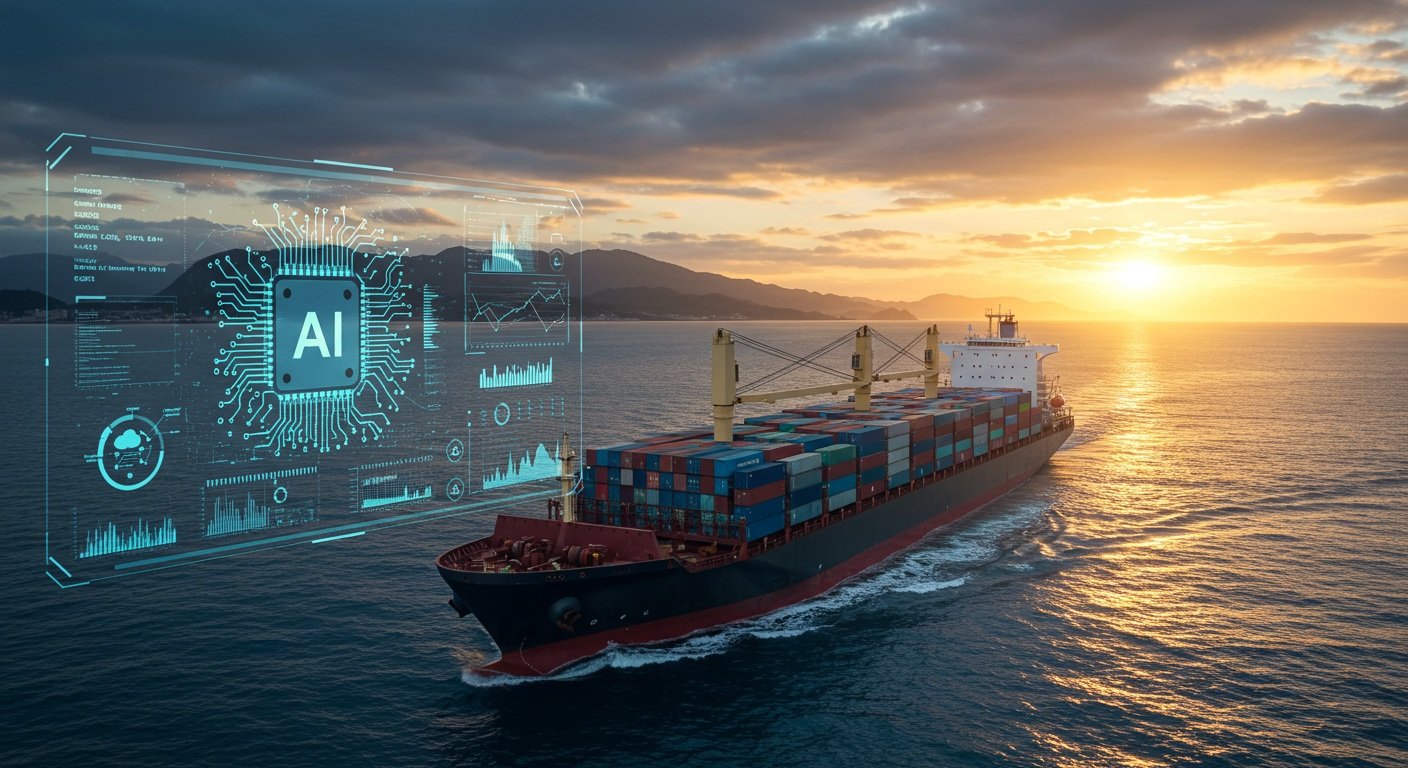
Japanese electronics company OKI reports that it has developed a new AI-based system for the automatic classification of ship types through deep learning of underwater sounds.
The company says that the technology makes it possible to continuously and automatically acquire ship classification data, even in environments such as ports with high ship traffic or at night when visual identification using cameras is difficult.
Internal verification has demonstrated that the system can classify ships with 90% or better accuracy, based on a deep learning model prepared using approximately four hours of ship sound data.
Building on its existing expertise in underwater acoustic products, OKI has developed systems that can analyse the characteristics of sounds received by underwater microphones and create deep learning models from the recordings, automatically classifying ships based on their frequency characteristics without relying on humans.
Deep learning models typically require large amounts of learning data to accurately identify sound types. However, OKI says that, since the amount of publicly available underwater sound data is limited, it applied a range of processing techniques to enable classification based on small amounts of data.
This included data augmentation, which artificially creates variations for actual ship sound data, and semi-supervised learning, which trains the model using ship sound information from partial data.
The company says that it will now begin searching for co-creation partners to gather field data and conduct practical verification of its system with a view to commercialising the technology.


