

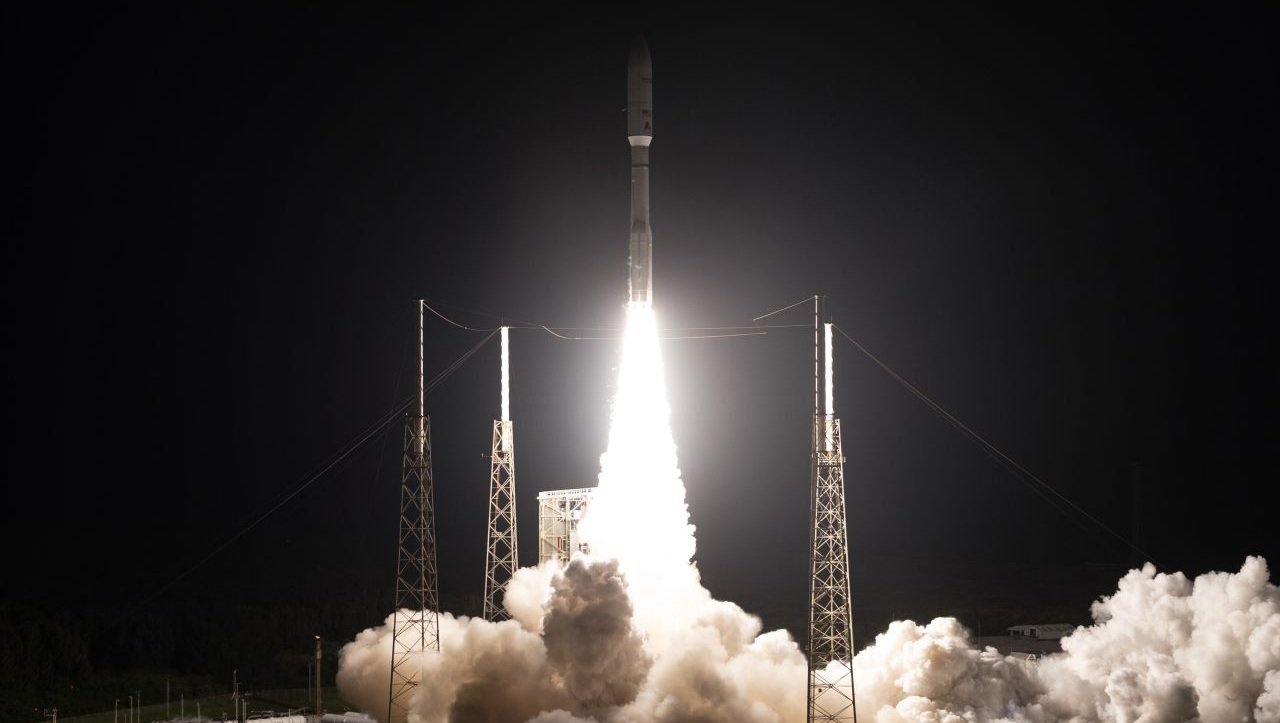
United Launch Alliance (ULA) has successfully deployed 29 Amazon Leo satellites into low Earth orbit following a liftoff from Cape Canaveral, Florida. The flight marks the eighth and final mission of the Leo Atlas launch campaign.
The deployment brings the total number of satellites in the network to 396 across 14 completed missions, making Amazon Leo the third-largest constellation in orbit. Formerly known as Project Kuiper, the low Earth orbit satellite network commenced full-scale deployment in April 2025.
Future missions with ULA will transition to the new, heavy-lift Vulcan rocket, which is designed to carry larger payloads and increase the network deployment rate. Amazon Leo plans to increase its overall launch cadence over time, having secured more than 100 launches to date.
“Atlas V has played a critical role in the early deployment phase for Amazon Leo, launching 224 satellites with a 100% success rate across all eight missions, and we’re excited to build on that foundation with ULA as we transition to Vulcan,” said Melissa Wuerl, Director of Launch Systems at Amazon Leo.
“With hundreds of flight-ready satellites standing by at the Cape and a new, dedicated vertical integration facility ready to support Leo Vulcan 1 and subsequent missions, we have a clear path to increase launch and deployment cadence, helping us quickly expand network coverage following an initial service rollout later this year.”
Following the launch, the Amazon Leo team assumed control of the satellites from its mission operations centre in Redmond, Washington. After completing initial contact and health checks at an altitude of approximately 465 kilometres, the satellites will be raised to their assigned operational altitude of 630 kilometres and fully commissioned to begin delivering service.


